
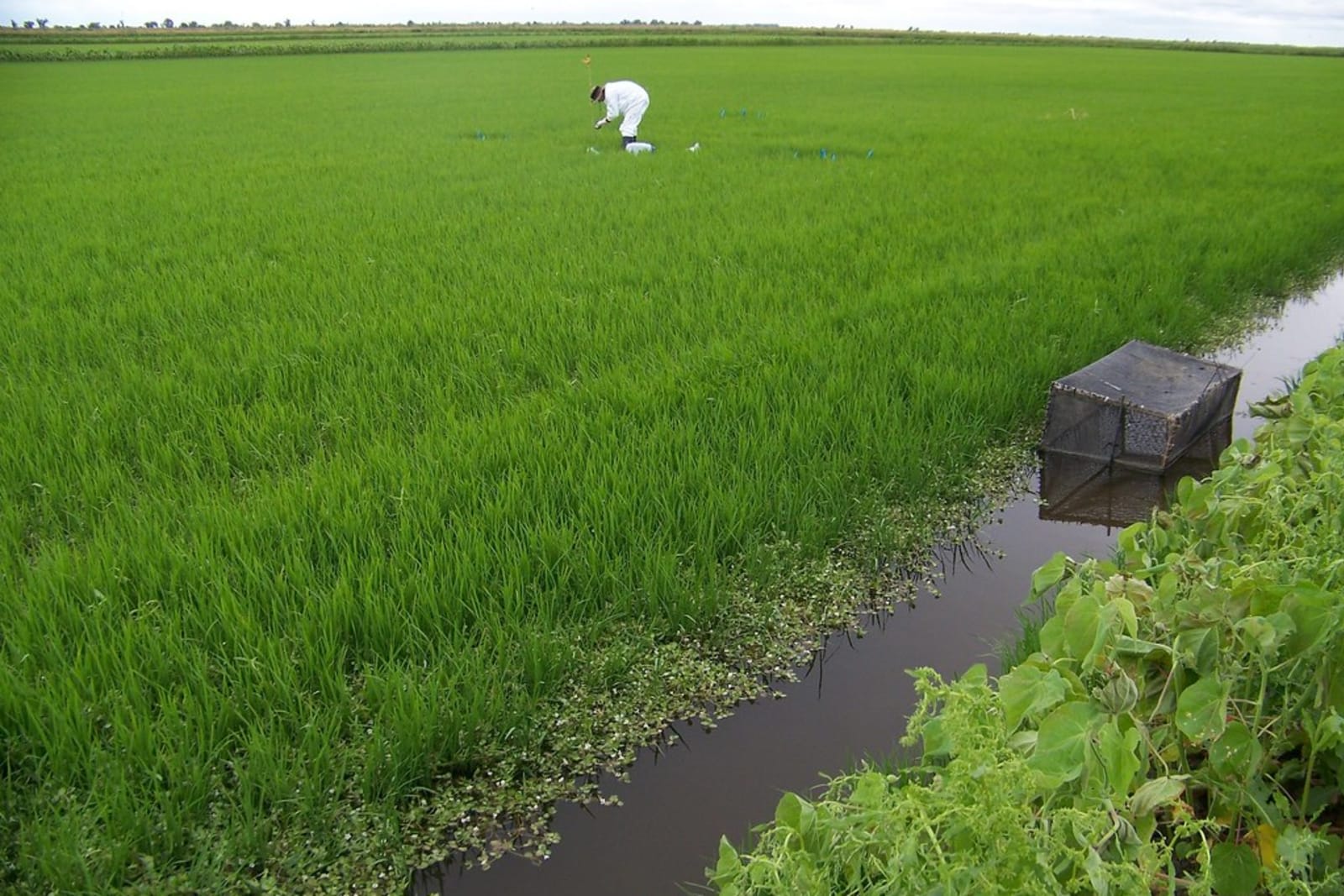
Rice that can hold its breath
In much of the Terai the risk is no longer too little water. It is a week of too much, at the wrong moment — and a variety that survives that week changes what a season is worth.
Climate Adaptation
Rice grows in water, which makes it easy to assume it cannot drown. It can. Completely submerged, a normal rice plant spends its reserves stretching upward for air it cannot reach, and after about a week of that it has nothing left to recover with. A single flood at the wrong moment can take the season.
Submergence-tolerant rice inverts the strategy. Instead of racing the water, the plant sits still: growth pauses, reserves are held, and it waits. When the flood drains it restarts from a plant that still has something to restart with. The trait is bred into varieties farmers already know, so it arrives without asking anyone to change how they farm.
The value is not a bigger harvest in a good year — in a good year it changes nothing. The value is the floor it puts under a bad one. A household that knows a flood will cost it a portion rather than everything can afford to invest in the crop at all, and that shift in willingness matters as much as the tonnes.
The same logic is now being asked of heat and of drought at flowering, where a few badly timed days decide the yield. Breeding for the average season is the easier problem. Breeding for the season that goes wrong is the one that decides whether a farm recovers.